Lo habitado
Sinopsis
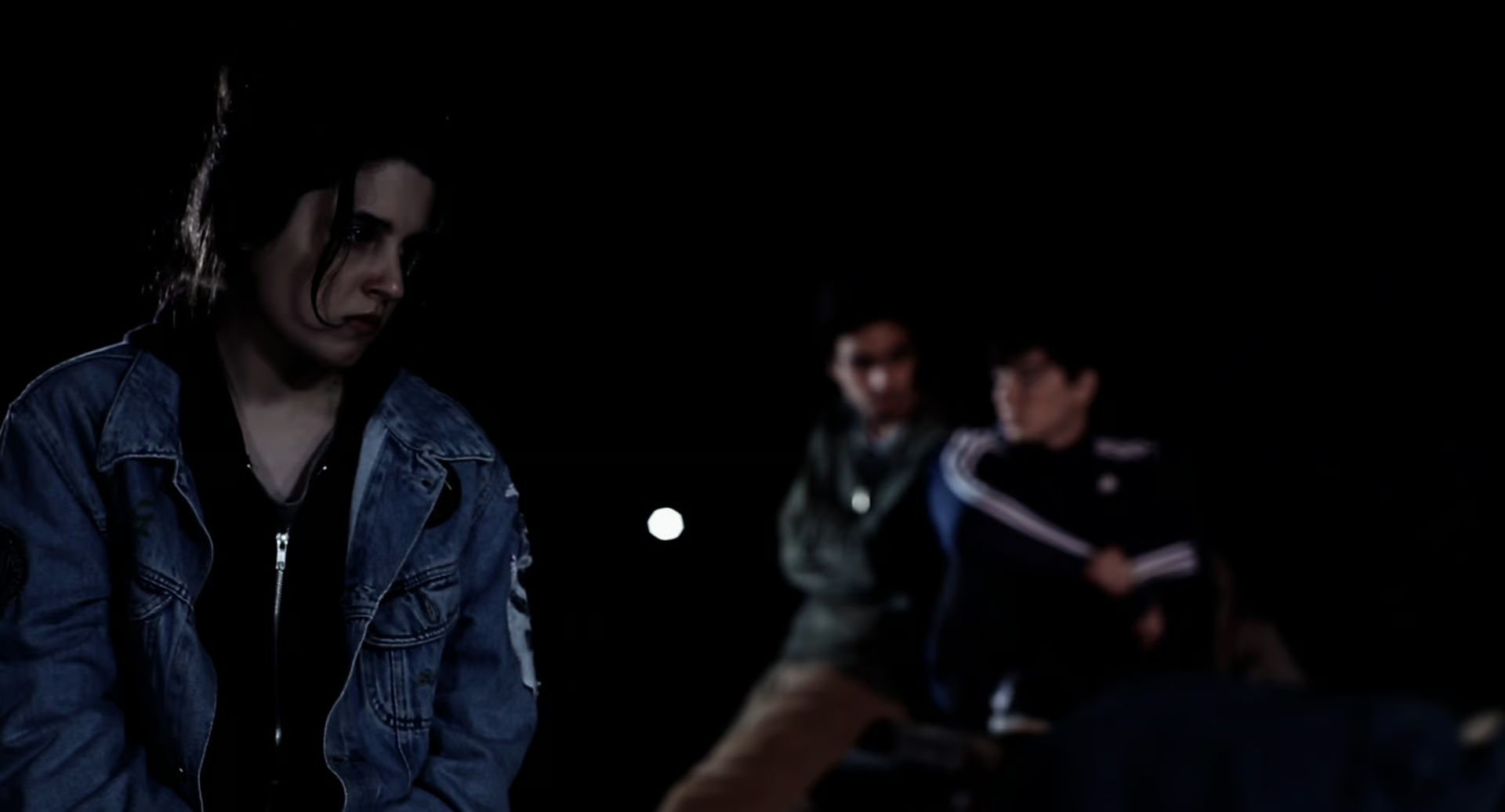
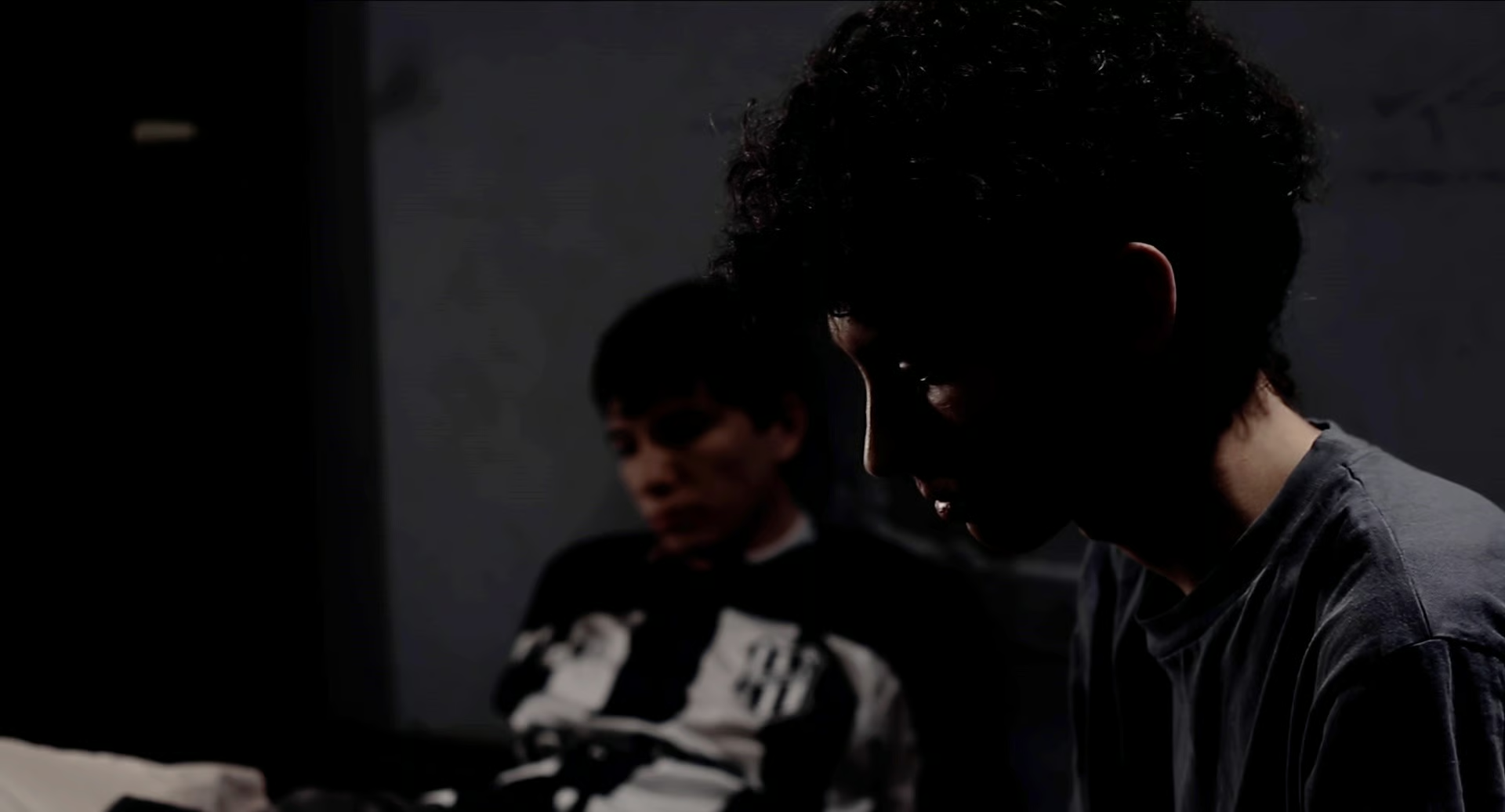
Cuatro adolescentes ocupan una casa abandonada en un barrio popular en las afueras de Buenos Aires para construir un refugio donde escapar del abandono familiar, el maltrato de los vecinos y el constante acecho de la policía. En un territorio de sonidos fabriles y paredes corroídas, los jóvenes son observados por su entorno. Una historia de jóvenes que únicamente se tienen a sí mismos.
Motivación
Nací y viví toda mi adolescencia en un barrio popular de los suburbios de Buenos Aires llamado Gerli, eludiendo la mirada acechante de los vecinos y el apriete de la Policía.
Vestirse de negro, escuchar música punk y tener el sueño de la revolución era de alto riesgo allá por los 2000, como si ser joven fuera un delito en si mismo. No nos terminaba de convencer el proyecto de vida que nos vendían en la tele y los diarios y, entre cerveza y cerveza, empezamos a leer los textos de Bakunin, Marx y Tristan Tzara.
Es posible que en esa raíz esté la necesidad de construir un cine que sea capaz de captar las historias ocultas de los barrios. Algo así como una revancha contra aquel sueño del arte que nos quedaba tan lejos, algo así como un homenaje a una juventud que pretendía y pretende tomar el cielo por asalto.
Sobre la película
En Lo habitado nos propusimos construir una mirada sobre la adolescencia, poniendo el foco en ciertos jóvenes que viven al margen del proyecto de vida que la sociedad les impone. Santiago, Miguel, Mercedes y Facundo no son esos jóvenes idealizados de tapa de revista, ni tampoco demonios de armas largas y narcotráfico.
Sus días transcurren entre paredones fabriles y ruidos de tren, mientras sueñan, algunos con más y otros con menos esperanzas, con un mundo distinto.
La contracara de los sueños está en manos de la Policía y su gatillo facil, porque a lxs que no se domestica con pantallas de celular y globos de colores, la sociedad les responde con balas.
Habitar un espacio analógico es un acto de rebeldía, y allí donde hay juventud, siempre hay resistencia.
Festivales (selección)
- SANFIC17 – Santiago Festival Internacional de Cine (2021) – Santiago de Chile
- AL ESTE – Festival de Cine de Europa Central y Oriental (2022) – Lima, Perú
- VI Maldito – Festival de Videopoesía (2022) – Madrid, España
- SANFICI 6 – Santander Festival Internacional de Cine Independiente (2023) – Santander, Colombia
- Muestra Internacional de Cine en Ensenada (2023) – Ensenada, México
- ENE – East x Northeast International Film & Music Festival (2022) – New York, USA
Work in Progress
- Ganadora VIII Work in Progress Iberoamericano (2019) – SANFIC Industria – Santiago de Chile
- Selección Málaga Work in Progress (2020) – MAFIZ Festival de Málaga – España
Inhabit
Synopsis
Four teenagers occupy an abandoned house in the outskirts of Buenos Aires, seeking a shelter from family neglect, hostile neighbors, and constant police harassment. In a battered industrial landscape, the youths are relentlessly observed by their surroundings. A story of young people who only have each other.
Motivation
I was born and spent my entire adolescence in a working-class neighborhood in the suburbs of Buenos Aires called Gerli, evading the watchful eyes of the neighbors and the pressure of the Police.
Dressing in black, listening to punk music, and dreaming of revolution was high-risk back in the 2000s, as if being young were a crime in itself. We were never fully convinced by the life project sold to us on TV and in the newspapers, and between beer after beer, we began reading the texts of Bakunin, Marx, and Tristan Tzara.
It is possible that from those roots comes the need to build a cinema capable of capturing the hidden stories of the neighborhoods. Something like a revenge against that dream of art that felt so distant to us, something like a tribute to a youth that once sought—and still seeks—to storm the heavens.
About the Film
In Lo habitado we set out to construct a vision of adolescence, focusing on certain young people who live on the margins of the life project imposed on them by society. Santiago, Miguel, Mercedes, and Facundo are neither the idealized young people on magazine covers nor demons with long guns and drug trafficking.
Their days unfold among factory walls and the sound of trains, while they dream—some with more hope and others with less—of a different world.
The flipside of those dreams lies in the hands of the Police and their trigger-happy violence, because for those who cannot be domesticated with cell phone screens and colorful balloons, society responds with bullets.
To inhabit an analog space is an act of rebellion, and wherever there is youth, there is always resistance.
Festivals (selection)
- SANFIC17 – Santiago International Film Festival (2021) – Santiago, Chile
- AL ESTE – Central & Eastern European Film Festival (2022) – Lima, Peru
- VI Maldito – Videopoetry Festival (2022) – Madrid, Spain
- SANFICI 6 – Santander International Independent Film Festival (2023) – Santander, Colombia
- International Film Showcase in Ensenada (2023) – Ensenada, Mexico
- ENE – East x Northeast International Film & Music Festival (2022) – New York, USA
Work in Progress
- Winner – VIII Ibero-American Work in Progress (2019) – SANFIC Industria – Santiago, Chile
- Selection – Málaga Work in Progress (2020) – MAFIZ, Festival de Málaga – Spain